The Heights of the Mountains Are His: The Development of God’s Country

Pastoral Letter to the People of God of Northern Colorado on Western Slope Growth
The Heights of the Mountains Are His
The Development of God’s Country
J. Francis Stafford
Archbishop of Denver
24 November 1994
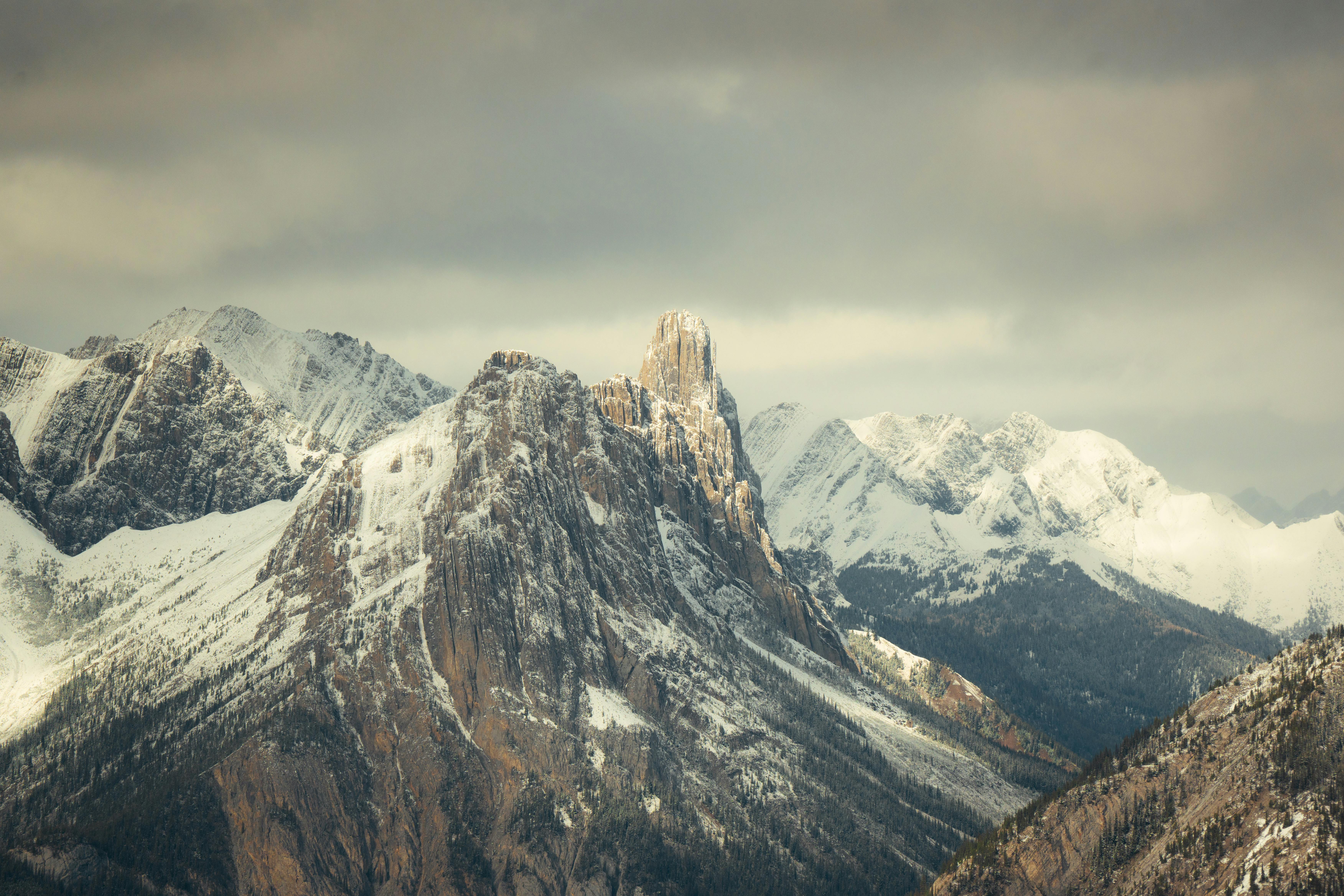
Thanksgiving Day
Be strong and of good courage;
be not frightened, neither be dismayed;
for the Lord your God
is with you wherever you go.
Jos 1:9
“For the Lord is a great God
And a great King above all Gods.
In His hand are the depths of the earth;
The heights of the mountains are His also.”
I. AN OVERVIEW
1. To the people of God of northern Colorado, and to all persons of good will: Greetings in the Lord Jesus Christ!
To all those who work in the shadow of our mountains; to all those who live and build and dream in this beautiful land, this place which so many generations of Americans have instinctively understood as blessed: May God truly open our eyes to the beauty of the land we inhabit, and to the message that arises from it, the glory of God. May He fill our spirits with gratitude for the bounty of our environment. And may He unlock our hearts to reflect on His word—a word which He speaks not only in Scripture, but above all in His only Son, through whom all things were made (Gn 1:3).
2. Nature teaches that God is a God of fiery beauty and sublime mystery. He created humanity as part of nature, but endowed us with special dignity to fulfill a special purpose. As Athanasius wrote, “The impress of Wisdom has been created in us and in all His works.” God fashioned us out of the same clay as the earth, but He made us creatures of intelligence and conscience by His breath. He placed us as stewards over creation. He made us executors of His plan. He made each of us the keeper of our brothers and sisters.
3. “And God saw everything that He had made, and behold, it was very good” (Gn 1:31). Yet when we sinned by deliberately going against the Creator's plan, creation “rebelled” against us. Because we are not at peace with God, earth itself cannot be at peace. It is only in our redemption, through the death and resurrection of Jesus, that creation has also been made new. In the wounded heart of God's Son, the Holy Spirit reveals that our heavenly Father is also a God of the noblest tenderness who cares profoundly for us all.
4. Thus, human beings are inextricably linked, in Christ, to each other and to the created world. We are social creatures. We are involved with each other. We were designed for life in community. All of our economic, political and even purely personal actions have consequences for our shared environment. No one counsels a troubled child or models charity, makes a profit or suffers unemployment, without somehow impacting the wider moral ecology of our lives. It is in this light that recent events in Colorado must be urgently examined.
II. PRESENT REALITIES
5. The past several years have seen explosive economic activity along the entire Front Range of our state. In the wake of the hardships suffered by so many Coloradans in the mid-1980s and later, much of this growth is seen as a gift. The influx of population, talent, capital and new businesses has created expanded markets, new opportunities, more jobs and increased revenues for public services; it has enriched our cultural environment and renewed our spirit of optimism. Poised on the brink of a new century, metropolitan Denver is more truly the “queen city of the plains” than ever before. Along the eastern ramparts of the Rockies, from Fort Collins to Colorado Springs where two-thirds of Coloradans live, a river of new human commerce divides flatlands from peaks. We all feel the dynamism of this moment. Something is happening.
6. Yet we are moral as well as economic creatures; creatures who love and think, who act and are not merely acted upon. And so we must ponder the implications of this growth. We must also remember that the Front Range is not the “only” Colorado. It is not even the spiritual center of Colorado. If, in the frenzy of this hour's success, our urban populations turn inward, forgetting the needs of our sisters and brothers who inhabit a different Colorado of mountain or farm, then we will violate a covenant of trust with God, who has placed into our hands a land so rich in natural beauty and human possibility that it resembles a sacrament. In my 1989 pastoral letter to the Church of northern Colorado, “Virtue and the American Republic,” I wrote, “The imperative of stewardship embraces not only the measured right to use the wealth of our world for the common good, but the corresponding obligation to respect and preserve its richness as a sacred trust for generations yet unborn” (71).
7. We live in a holy place. God is present with us. The shadows of the Rockies which fall across the Front Range every evening are more than a picturesque backdrop to our daily routine; they are the shadows of heaven itself. Among those peaks and valleys lies a landscape c.f. opportunities and problems which will help determine the future of our entire state, a landscape which we cannot ignore and for which we must take moral responsibility.
8. The time when the Western Slope could be overlooked as a reserve of empty, if beautiful, solitude, has long since passed. The current explosion of Front Range growth has its parallel in communities throughout the mountains, where the physical and social environments are far more fragile because of their unique climate and geography. The impact of growth, at the human level, is therefore much more immediate, dramatic and costly on the Western Slope than along the Front Range. However, the course of this growth is not always understood or widely discussed. Nor are its side effects.
9. Yet if the distinctive beauty of Colorado—one might say its form or soul—resides anywhere, surely it must dwell, at least part of the year, in the character of this high country and its people. And just as it is possible for a person to lose his or her soul through a lifetime of indifference, so Colorado can lose its distinctiveness, its soul, as a community by failing to pay attention to the changes now taking place on the Western Slope.
10. Today, there is an ecological crisis in our beautiful mountains, valleys, parks and rivers; we are again reminded that “the whole of creation has been groaning in travail together until now” (Rom 8:22). It is no accident that the use of Colorado's water has become the source of intrastate, regional and even international tensions. Our responsibility as citizens must be to encourage growth where it is healthy and sustainable; to guide its course to benefit the maximum number of people who actually live and work there; and to help preserve the best qualities of life and nature on the Western Slope from the exploitation which rapid, imprudent growth can inflict.
11. A caution before proceeding. The Church is never simply “anti-growth.” On the contrary, she has a long tradition of defending the right to acquire and own private property, to conduct commerce and to earn reasonable profits. In other words, she is pro-development, so long as “development” is understood and judged in its fullest, which means moral, sense. Authentic growth can never be merely economic; it is always primarily moral.
12. Every economic venture must attempt to ensure the spiritual dignity of all the persons whom it will affect, and the proper identity of each community where it takes root. Land development which displaces the poor or buys out the elderly without due concern for their subsequent human needs is not “development”; it may build houses, but it destroys communities. In these wounded communities, we may legitimately speak of economic “structures of sin,” constructed stone by stone from many acts of indifference and other personal sin over time. The inevitable result is social conflict. As a vast body of Catholic social doctrine attests, peace is not simply the absence of war; it is the harmonious public order in which the human possibility for virtue, especially justice, can thrive.
13. This applies locally, as well as globally. One of the first signs of unjust development is the housing crisis. The resort worker, who cannot afford local rental housing and must live in a tent or trailer, while his or her family endures the further risk of illness without proper health insurance, is the seed of future civic turmoil. The cost of justice later will be far higher than its cost now. Fortunately, some Western Slope employers and developers have awakened to this dilemma. But much more needs to be done. And we need to look at the facts at their source.
14. Only by driving the roads and by meeting and listening to the local people does one begin to get a sense of the human dimension of the Western Slope. I had done this before. I did so again throughout May of this year, beginning on the Memorial of St. Joseph the Worker and ending with the novena to the Holy Spirit in the days prior to the Solemnity of Pentecost.
15. The experience this time was unlike anything in the past. So much is happening so rapidly that the basic social infrastructure throughout the region is simply being overwhelmed. The liturgical and pastoral demands on priests, deacons, women religious and lay pastoral ministers who work on the Western Slope have escalated sharply as the population of new homeowners and service workers continues to rise. Public schools, utilities, courts and social services face similar strains.
16. In a sense, the Western Slope is not one culture, but several. Communities like Rangely, Meeker and Craig—rich in open land, and with their economies rooted in oil and natural gas, ranching, farming and mining—face opportunities and problems that are quite distinct from Basalt or Minturn or Steamboat Springs. But as traffic and commerce along Interstate 70 have grown, this highway has become Colorado's central artery, feeding, tying together and relentlessly transforming the entire Western Slope.
17. Today, nowhere is this change more pronounced than along the five-county I-70 resort corridor. The population here has grown 10 percent since 1990, but more than half of the people who are employed work low-paying service-industry jobs. In Eagle (which includes Vail) and Pitkin (which includes Aspen) counties, the service industry accounts for more than two-thirds of all jobs. At a $6, $9 or similar hourly rate, few of these people can afford to live where they work. This burdens them with heavy transportation costs and forces them into long commutes on highways that, especially during the winter months, cannot safely or adequately handle the traffic flow. The births of infants on Medicaid have risen steeply throughout the region, since service jobs often do not include health insurance. Illegal immigration has also increased, reinforcing the pattern of low wages and creating a subculture that is not merely poor but without political recourse.
18. In two-parent families, the low wages frequently force both father and mother to work at a declining return for their labor, since child care absorbs a significant portion of their pay. Alternatively, in single-parent families or where child care is too great an expense to bear, numerous “latchkey” children, in effect, raise themselves. The trouble is compounded by the exhaustion and futility felt by many parents who, after working long hours for low pay and commuting great distances, cannot interact with their children in a normal, emotionally satisfying way. Parish workers have already seen an increase in domestic friction, as well as in drug and alcohol abuse. Local social service agencies now struggle to handle the case load.
19. The elderly are not immune from this dislocation. Neither is the middle class. As outside capital has poured in to buy up available space, land values have appreciated. On the surface, this may seem to benefit the historic residents. For those able to sell and relocate outside the region, the profit can be substantial. But “trading up” locally is often impossible because the housing inventory is limited and always inflating in price. Moreover, as land values escalate, so too does the tax burden, squeezing out those on modest or fixed incomes. Many who wish to stay and who have long-time family roots in the region now face a kind of economically driven exile. They can no longer afford to live in the towns and rural areas where they were born and which they have known all their lives.
20. What we risk creating, then, is a theme-park “alternative reality” for those who have the money to purchase entrance. Around this Rocky Mountain theme park will sprawl a growing buffer zone of the working poor. In the last century the Western Slope functioned as a resource colony for timber and mining interests. Those scars will be with us for generations. We cannot afford to stand by now as the culture of a leisure colony, like the walled communities which dominate so many American suburbs, takes its place. The West is famous for its open hospitality, but we are watching the warmth of a friendly handshake disappear.
21. Again, our concerns are not with money itself, or progress, or financial success earned through honest labor. Persons have the right to enjoy the fruit of their ingenuity. But this cannot occur in a social vacuum. What the Church brings to the discussion of Western Slope development is a confidence in the human ability to transform “problems” into opportunities. The Church does not subscribe to that most pervasive yet least impressive side of modern culture: freedom without responsibility. We are not victims. We are more than the product of economic forces. We can redirect those forces to model justice by applying our God-given intelligence in the search for fair solutions, guided by the conscience we all share.
III. TOWARD THE FUTURE: SOME BASIC PRINCIPLES
22. As Pope John XXIII wrote in his encyclical Mater et Magistra (226), all Church teaching on social matters has “truth as its guide, justice as its end and love as its driving force.” In that light, we should recall the words of the Second Vatican Council's Pastoral Constitution on the Church in the Modern World, Gaudium et Spes (69): that “God intended the earth with everything contained in it for the use of all human beings and peoples. Thus, under the guidance of justice together with charity, created goods should be in abundance for all in an equitable manner.”
23. Thus, true development, as we noted earlier, must always be understood in a moral context. Pope John Paul II reminds us in his encyclical Centesimus Annus (39.4) that: “[E]conomic freedom is only one element in human freedom. When it becomes autonomous, when man is seen more as a producer or consumer of goods than as a subject who produces and consumes in order to live, then economic freedom loses its necessary relationship to the human person and ends up by alienating and oppressing him.”
24. In his encyclical Sollicitudo Rei Socialis (9.8), he notes that: “True development cannot consist in the simple accumulation of wealth and in the greater availability of goods and services,” especially if this is gained at the expense of the wider community “and without due consideration for the social, cultural and spiritual dimensions of the human being.”
25. Finally, the Church does oppose what Pope John Paul II calls “a form of superdevelopment.” This “consists of an excessive availability of every kind of material goods for the benefit of certain social groups...This is the so-called civilization of ‘consumption’ or ‘consumerism,’ which involves so much ‘throwing away’ and ‘waste’...All of us experience firsthand the sad effects of this blind submission to pure consumerism: in the first place a crass materialism, and at the same time a radical dissatisfaction, because one quickly learns...the more one possesses, the more one wants, while deeper aspirations remain unsatisfied and perhaps even stifled” (SRS, 28.1-2).
26. In sum, the right to private property and personal profit is not absolute. It carries a social mortgage, and “man should regard the external things he legitimately possesses not only as his own but also as common in the sense that they should be able to benefit not only him but also others as well” (GS 69). As this applies to the situation today on Colorado's Western Slope, the following principles need to be reflected upon:
27. People must take priority over capital. We first learn about truth, about God, and about what it means to be human in our family. The family is the heart of every society. Therefore all growth must be judged by its impact on family well-being, presently and in the future. Every person has the right to a living wage in order to build and provide properly for his or her family.
28. The family cannot sustain itself on inadequate pay or in circumstances that undermine a stable home life. The tent and trailer camps, sometimes without electricity or running water, that today house so many service workers on the Western Slope, raise troubling questions about the kind of society emerging there. All those affected by the explosive economic activity on the Western Slope have a right to share in its fruits and, in some way, to participate in guiding its course. Employers are gravely obligated to provide a just wage and reasonable benefits to their workers, such as health care. They also have the duty to concern themselves with the “human ecology” of the communities where they make their profits. On the Western Slope, where so many people work in one county but are forced to live in another, the social obligation of employers is regional and not merely local. This includes the responsibility to help create good, affordable housing within reasonable distance of the jobs they offer, along with adequate sanitation and other utilities, hospitals and clinics, social services and recreation facilities.
29. Growth must be prudent, varied and sustainable. It is unfair and unrealistic to “lock up” so much of nature as to prevent the spread of economic activity. But all growth must be calibrated to remain in balance with nature. Human beings must act as stewards of the earth, rather than conquerors and extractors; we must develop a fraternal relationship with the environment. Our vision of the natural world “made new” will come about only through penance and self-sacrifice. Reverence for creation, founded on self-restraint, stands in direct contrast to the past boom-and-bust cycles of Colorado's economy. Rooted in an overreliance on mining and oil, these cycles offer a prime example of how not to proceed on the Western Slope. The dangers of a lopsidedly tourism-dependent commerce are its economic shallowness and the damage it will inflict by overusing the environment. To create a legacy for our children and grandchildren that is worth inheriting, we will need to practice self-discipline in building a varied economic infrastructure. Thus, we must pay attention to the consequences of development on the Western Slope to ensure the well-being of present and future generations.
30. Community spiritual and educational needs must be provided for. Families give birth to children, and children must be educated not simply in facts but in truth. Development planners must take into account the need for public schools; the right of parents to choose alternative education for their children in religious or other private schools, and to acquire land to build these facilities; the need for affordable housing for teachers and staff, police, firefighters and other civil servants; and the right of communities of faith to purchase land for churches and synagogues at reasonable cost.
31. The stranger should find welcome. Drawn by the hope for a better future, thousands of migrant workers now fill the lower ranks of the Western Slope job market. Many are foreign, and their job options are unattractive. Many people are undocumented. Many speak little or no English. Because of this, they are more vulnerable to exploitation than the region's long-time residents, and their predicament is often compounded by ethnic or racial discrimination. Whether we regard our nation's immigration policies as right or wrong, all persons possess a basic human dignity. They deserve the same respect due every other child of God, and the same social safety net which is the minimum right of every other worker.
IV. CONCLUSION
32. In “Virtue and the American Republic” (43), I highlighted the three basic forms of justice which underpin Catholic social teaching:
commutative justice; i.e., “what we owe each other in contractual obligations,” such as the normal relationship between employer and employee.
distributive justice; “how we order the goods of this world.”
legal justice; “the institutions and processes by which society pursues the common good.”
33. Since economic conditions on the Western Slope frequently leave large numbers of workers employed in conditions which are dehumanizing to them and their families, employers and governments have so far failed to meet the converging demands of these three forms of basic justice. In the same 1989 pastoral letter, I stressed the inseparability of justice and love: “It is important to recall that in the Christian tradition, justice is inseparable from love and is completed by it” (45). That tradition has always taught that redemptive love is the bond and form of justice. Penance and self-denial in the following of Christ are the personal price we must pay to learn the habits of gentleness and compassion toward others.
34. All of us who live in Colorado have a stake in our common future, in using our freedom in the pursuit of justice. While the geological foundations of our state are literally set in granite, the moral foundations of our shared life, and of our care for the environment, must be rooted in conscience and purity of heart. Thus, we must remember that we all stand equally “in the shadow of heaven.” We are stewards not simply of the land, but of one another's well-being and rights. This is a great responsibility; an immense privilege and opportunity. The task on the Western Slope is not to indict any particular group or shut down the tourist resorts in an effort to return to an imagined pristine past; but to encourage growth in a direction, and at a pace, and with a variety, that serves the maximum number of people who actually live and work there in the best possible way. The ultimate guiding norm for any development on the Western Slope is safeguarding and promoting the transcendent dignity of the human person as the visible image of the invisible God.
35. With God's grace, this task is doable, and we are called to help accomplish it, according to our talents and our opportunities to speak out—especially in unity with others who may not share our faith, but who do understand and share our sense of stewardship for the future. Colorado is blessed with many such citizens. In September, more than 200 elected officials, business and community leaders gathered at Copper Mountain for the Summit Symposium on Growth. Their concerns—adequate, affordable housing; a stable work force; protecting the environment; a diversified economy—while appropriately civil and secular, parallel our own.
36. On this Thanksgiving Day 1994, I thank God for the freedom which this extraordinary nation guarantees and which calls us to the proper use of His gifts. I thank God for the beauty of Colorado and the solidarity her people have shown so often in the past, most recently and powerfully during World Youth Day 1993. I began this pastoral letter with greetings to all people of good will. I do so again here. It is the goodness of people, their fundamental decency and sense of justice, that makes all genuine human progress possible. On the Western Slope, we have a unique opportunity to demonstrate this truth once again. As the adage goes, history is a record of the encounter between character and circumstance. What will future generations record of us?
37. I thank God as well for the witness of the saints, especially Francis of Assisi, the heavenly patron of those who promote ecology. We in Colorado can easily identify with his great Canticle of Brother Sun. Francis begins by singing the praise of God through lord and brother sun, symbol of masculine strength, and ends with the praise of God through mother and sister earth, symbol of feminine fecundity:
All praise be yours, my Lord, through all you have made
and first my lord Brother Sun,
who brings the day; and light you gave us through him.
How beautiful is he, how radiant in all his splendor!
Of you Most High, he bears the likeness...
All praise be yours, my Lord, through Sister Earth, our mother, who feeds us in her sovereignty and produces
various fruits with colored flowers and herbs.
38. During my May 1994 pilgrimage and visitation to the parishes of the Western Slope, I noted a widespread sense among our priests and people of the need for a radical, personal and social renewal in their communities. They indicated that a difficult political, ecological and ecclesial road lies ahead in that land of economic contrasts. Bringing about a renewal of justice for the working poor and the aged will therefore require an enormous effort. Nor can Christians remain oblivious to the wisdom in created things which reflects the only begotten Son in the world.
39. I also observed that people in all segments of society on the Western Slope are, in fact, committed to ensuring justice, solidarity, honesty, self-restraint and openness in this period of immense change. The Catechism of the Catholic Church affirms their commitment: “In economic matters, respect for human dignity requires the practice of the virtue of temperance so as to moderate our attachment to this world's goods; the practice of the virtue of justice, to preserve our neighbor's rights and to render what is his or her due; and the practice of solidarity, in accordance with the Golden Rule and in keeping with the generosity of the Lord, who ‘though He was rich, yet for your sake...became poor, so that by His poverty you might become rich’” (2407).
40. One of the basic aspirations of people everywhere is the need to be in contact with what is good as the object of our love. Human beings are concerned about what constitutes a rich, meaningful, honorable life, as opposed to a wasted or empty one. On the Western Slope, we have arrived at a crossroads. We must choose a path into the future guided by prudence, justice, and a reverence both for human dignity and for nature. We cannot do this without God. We must find ways of using political and economic power that have a kinship with innocence; so that, with Francis of Assisi, we may call all creatures our brothers and sisters and arrive at the glorious freedom of the children of God (1 Cel 81).
41. Thus, it is fitting that nine of the Catholic parishes there are dedicated to the Immaculate Virgin who prayed a new song of praise and joy because of God's unique gift of grace in the incarnate Word. On this Thanksgiving Day, we sing of God with Mary of Nazareth, who carried Jesus within her womb on her Advent visit to the hill country of Elizabeth in Judea: “His mercy is on those who fear Him from generation to generation” (Lk 1:50).
Our Lady of the New Advent, pray for us!
+J. Francis Stafford, Archbishop of Denver
24 November 1994