In Christ Jesus, Part 1

As servant of Jesus Christ and bishop by the power of the governing Spirit, I extend to the Church of Memphis in Tennessee grace and joy from the Father of glory and the Prince of peace.1
I. THE ETERNAL PLAN OF THE FATHER OF CHRIST JESUS
We bless the God and Father of our Lord Jesus Christ who has blessed us in His Son with every spiritual blessing. Before the Delta was set in its vaguely realizing westward slope or the beds of the Mississippi and Tennessee Rivers were established, He destined us to be His very own people to the praise of His glory. He called us in His Beloved to be holy and blameless in His sight all our days on earth. He chose us to be His sons and daughters in Christ, His own family in West Tennessee. Through a sheer gift He has forgiven our sins in the blood of Christ. By His boundless power He has bent over us in mercy; He has revealed in His wisdom the mystery of His will held secret for ages but now present to us in Christ. This mystery is a plan for the fullness of time to unite all people and all things in Christ to the praise of His glorious grace. This plan of renewal and recapitulation of everyone and everything in Christ includes God's creation in West Tennessee.
In Christ Jesus thousands whose faith has been handed on through generations of Tennessee forebears are united in one local Church with other thousands who first heard the word of truth outside of Tennessee. Black and white, rich and poor, old and young, men and women, healthy and ill, all in this diocesan Church have been sealed with the promised Holy Spirit, our consolation, our advocate and our teacher to the praise of His glory.
In the past three years of episcopal ministry among you, I have come to know that the plan set forth in Christ by God's will is alive and well in West Tennessee. Your love and practical generosity towards strangers are a reminder and sign that the limitless energy of God has always been and continues to be devoted to the faltering and homeless. I pray that you will appreciate God's power at work within you; it is the same power which God has exercised in Christ.
For this reason, I do not cease to give thanks for you and for your fifteen years as the Church of God in West Tennessee, remembering you in my prayers that God may show you the boundless novelty and infinite invention of the mystery revealed in the life, death, and resurrection of Jesus Christ. May the eyes of your heart be enlightened by the unsurpassable care of our God for all that is creative of life. May you know the hope to which God has called you: it begins with the wisdom that your pain and joy are taken seriously; it ends in wonder with the opening of the seventh seal and with the angel's trumpet whose call awakens the souls of God's servants. May you know what is the unswerving fidelity of Him whom Jesus addressed as “Abba! Father! You are my Father!” and in whom Jesus maintained unshaken assurance even when face to face with a terrible death on the cross. May you always look to Jesus the pioneer and perfecter of your faith who knew that His Father would insure the saving efficacy of what He suffered by “dying for others”. May those of you who are sick or frail know that your sufferings on behalf of others fill up what is lacking in the afflictions of Christ on behalf of His body, which is the Church.
May you finally know the immeasurable greatness of His power in us which first was manifest in Christ when God raised Him from the dead and exalted Him to His right hand, thereby revealing that Jesus’ death was an essential part of the salvation being accomplished by the power of God. The might of this same power is at work in us who believe, especially in times of weakness. The mighty far-flung abundance of God is at the service of the least among us. Moreover, His justice is the source of their enduring value. Are not Christ's death, resurrection and exaltation for the salvation of all peoples?
God's power revealed in Christ is absolute and supreme. The supreme power of the Son is not an end in itself; it is merely granted to Him in order that He may return it to God after completing His task.2 There is no other name anywhere in heaven or on earth like the name of Jesus. He is the definitive and indispensable Savior of all peoples throughout history. His Incarnation and Redemption are the fullness of God's justice in a human heart. Apart from Jesus Christ no one can achieve true existence and salvation. The Lord Jesus Christ is the goal of human history, the focal point of the longings of our local and universal history and civilization, the center of the human race, the joy of every heart, and the answer to all its yearnings. He is the source of the Church's life and truth. We confess in wonder that the Church is the fullness of Christ.
IN AND THROUGH CHRIST, GOD FULLY REVEALS HIMSELF
Our Tradition teaches that early in human existence there occurred a radical alienation, a profound rupture in our relationships to the Creator, to others, to self, to the created world—the original sin of our first parents. Its consequences continue so that “everyone feels as though he is bound by chains”.3 The central mission of the Church is the task of unburdening people and of reconciling them with God and with the whole of creation.4
“By her relationship with Christ, the Church is a kind of sacrament or sign of intimate union with God and of the unity of humankind”.5 The Church, revealed to the world on Pentecost6, is catholic not because of the inclusion of persons drawn only from the same economic or social class but by the fact that diverse peoples understood and expressed the marvels of God in their own language. For the Church to be more evidently catholic in West Tennessee, she speaks, sings, acts and prays through persons who reflect the rich racial, social, cultural and ethnic diversity among us. “The Church is also by her nature always reconciling, handing on to others the gifts she herself has received, the gift of having been forgiven and made one with God”.7
The Church is the universal and indispensable instrument for accomplishing the union of all peoples in Christ who fills all in all. The people of God humbly accept the teaching of the Second Vatican Council and of Pope John Paul II on the necessity of the Church for salvation. “The Church is necessary for salvation, because Christ, who is the sole Mediator and Way of salvation, renders Himself present for us in His Body which is the Church”.8 “Every human being comes into the world through being conceived in his mother's womb and being born of his mother, and precisely on account of the mystery of the Redemption is entrusted to the solicitude of the Church.”9 “The Holy Spirit, through whom the living voice of the Gospel resounds in the Church, and through her, in the world, leads unto all truth those who believe and makes the Word of Christ dwell abundantly in them.”10
In fulfilling the plan of God to unite all peoples in east, north and south Memphis, in rural areas, cities and towns, the diocesan Church of Memphis is the revelation of the universal salvation willed by God in Christ, the visible and tangible manifestation of His grace. For the unique and one Catholic Church exists in and through the Diocese of Memphis, as she does in every particular Church. Just as salvation is conferred only in Jesus Christ, so too the one Church in her own praise to the Father gathers from the ends of the earth into that praise all that, in the world, is for God. How I love that remarkable psalm which sings of the City of God:
Among those who know me I
mention Rahab and Babylon;
behold, Philistia and Tyre, with Ethiopia
‘This one was born there,’ they say.
And of Zion it shall be said,
‘This one and that one were born in her.’ Ps. 87:4-5
It proclaims the hope of a universal kingdom of God with Zion as its metropolis.
Some act as if a “new” Church was launched at the Second Vatican Council. They claim that the Council put “the People of God” at the Church's base in contrast to the old “hierarchic” conception of the Church.
Yet we read that the Council’s actual text says something different: “Chapter One—The Mystery of the Church”. By insisting that the Church is a “mystery”, we are challenged to recall the authentic Catholic Tradition and to block decisively any attempt to secularize, politicize or democratize the Church. The Catholic Church is the community of Christ’s disciples whose motive for assent in the act of faith is solely the authority of God revealing: This does not allow for the kind of pluralism required in a democracy. To us, who profess belief in the Church, the Catholic Church is not merely a fact of observation, or simply a group of people who consider themselves to be, or are considered to be, disciples of Christ. This is what unbelievers, politicians, and sociologists also see. We believe with the Second Vatican Council that the Catholic Church in her historical and visible reality is a work of the Spirit of God, a mystery known only to people of faith. To us, the Church is the mystery of Christ Jesus abiding in the community of those who are assembled in His Name. We acknowledge first and foremost that the Catholic Church is a mystery of grace, not knowable independently of grace; she is the spotless spouse of the spotless Lamb.11
IN AND THROUGH CHRIST WE ACQUIRE FULL AWARENESS OF OUR DIGNITY
The mystery of the Redemption contributes to a new and deeper knowledge which men and women seek for themselves today. In Christ we gain immeasurable dignity. He reveals the mystery of the human person. The Son of God walked the ways of a true Incarnation that He might make human beings sharers in God's life. This wonderful exchange is symbolized in the mixture of a few drops of water in the chalice of wine in each Eucharist. In Christ a new man is created who finds his glory in service, not in domination.
Christ is the New Adam. In Him alone can we. know the mystery of man and woman created in the image of God. “Christ the new Adam, in the revelation of the Father and His love, fully reveals man to himself and brings to light his most high calling.”12
Christ is our peace and reconciliation. By confessing that the God of Jesus Christ is the Father of all, we are called to love one another as brothers and sisters in Christ. Everyone is God's child. The Church is the sign and guarantee of that masterpiece which God intended human community to be, wherein “the whole human race is to form one people of God, coalesce into the one body of Christ, and be built into one temple of the Holy Spirit.”13
The Catholic Church in West Tennessee shines forth as “a people made one with the unity of the Father, the Son and the Holy Spirit.”14 We are the dwelling place of God among peoples, the holy temple built of living stones with the Apostles as our foundation. That we are holy and catholic is the work of God's Spirit among us.
I repeat that we have come to know the mystery of Christ. People in West Tennessee are no longer divided irreconciliably by race, creed, sex, culture or class. The gaps between us are bridged forever in Christ. All are called to be fellow heirs, members of the same body, and partakers of the promise in Christ Jesus through the Gospel. Each one of the one million, three hundred thousand persons in West Tennessee is willed by God, chosen by Him from eternity and called in Christ Jesus, destined for grace and glory. Every person has become a sharer in this mystery of Christ from the moment he is conceived beneath the heart of his mother. Each person's destiny, his election, his calling, his conception, birth and death, salvation or damnation, his culture are unbreakably and closely linked with Christ Jesus.15
Bishops, priests, deacons and the baptized are ministers of this reconciliation, each according to their vocation and charism. From the Chickasaw Bluffs to the Landings on the Tennessee River, they are called to preach the unsearchable riches of Christ and to unfold for everyone the plan of the mystery hidden for ages in God who created all things. The plan is that Christ has entered in a unique and unrepeatable way into the mystery of every human heart. “For by His Incarnation, He, the Son of God, in a certain way united Himself with every person. He worked with human hands, He thought with a human mind. He acted with a human will, and with a human heart He loved. Born of the Virgin Mary, He has truly been made one of us, like to us in all things but sin”. Through the diocesan Church, all people in West Tennessee may come to know the manifold wisdom of God according to the eternal purpose He has realized in Jesus Christ.
Our human personhood is the way of the Diocese of Memphis—our person in all its concreteness, in its conscience, in its continued inclination to sin and in its continued aspiration to truth, the good and the beautiful.17 The Catholic Church needs to become identified with the immense diversity of people living in the Mississippi Delta and all the western lands draining into the Tennessee River. I repeat, the human person in his concrete culture is the way for our Church—the way which invariably leads through the mystery of the Incarnation and universal Redemption. What a gift and task we have received in this mystery of reconciliation!
The unsearchable riches of Christ's Pasch are ours through faith which is God's activity within us. As the sacramental expression of faith, baptism is a real death to self and living to the Father; it signifies our “plunging” into the paschal mystery of Christ's death leading to our rising with Him. Faith and the sacrament of baptism are mirror-images of one another; both mean that dying and rising with Christ are life-long characteristics of the community of His disciples.
The baptized are already holy, already God's children in Christ Jesus. We form God's household and His dwelling place. Because we are His holy temple, we unceasingly give honor and glory to the Father through Christ, with Christ and in Christ in the unity of the Holy Spirit forever and ever.18 Our heart-felt “Amen” resounds throughout the universe in praise and petition that "the plan of the Creator, who formed man to His own image and likeness, will be realized at last when all who share the human nature, regenerated in Christ through the Holy Spirit and beholding together the glory of God, will be able to say ‘Our Father’.”19
II. AN EXHORTATION ON CHRISTIAN BEHAVIOR
I urge you, therefore, to be converted to Christ and His Gospel. Allow the Word to become effective in you, to achieve what it signifies. The Gospel requires a change and transformation in your whole person, in your memory and imagination, in your heart and intellect. You are called to live the new life or ethos of Redemption which flows from and is demanded by the truth that is the Gospel; it is only in doing the truth that we show forth the holiness of God's children.
THE UNITY OF THE DIOCESAN CHURCH
First and foremost, I beg you to lead a life worthy of your calling in the diocesan Church and all her parishes. Strive for peace and harmony among yourselves with all lowliness and meekness, forebearing one another in love. Give praise to God for His call to all people to be one body with Christ as its Head. Our unity is achieved by the confession of Jesus Christ as our only Lord, expressed in one baptism, the source of which is the oneness of God who is Father of all. Confess also your personal responsibility for the sin within you: anger, wrath, envy, ambition, impurity, slander, injustice, racism and evil talk. Burdened by these, the Church is a less credible sign of God's holiness and oneness. Put on holy simplicity, grace, wisdom and justice.
“The one eucharist is celebrated in various places. For this reason, the unique and universal church is truly present in all the particular churches, and these are formed in the image of the universal Church in such a way that the one and unique Catholic Church exists in and through particular churches. Here we have the true theological principle of variety and pluriformity in unity, but it is necessary to distinguish pluriformity from pure pluralism. When pluriformity is true richness and carries with it fullness, this is true catholicity. The pluralism of fundamentally opposed positions instead leads to dissolution, destruction and the loss of identity.”20
The Holy Spirit is the principle of the unity of the diocesan or particular Church. The Spirit effects this unity not by coercion or by reducing the whole of the Church's life to uniformity. Rather He does it by the more delicate way of communion; He enters into the depths of each believer's heart, thereby regenerating and renewing the springs of life. “By the one Spirit we were all baptized into one body”.21 One has the Spirit of Christ and lives in that Spirit when one is in the body of Christ which is the Church.
The fundamental unity of salvation does not exclude diversity within the diocesan Church. Each person has different gifts which are for the benefit and at the service of the whole Church. Christ's gifts are that some should be pastors and deacons; others should be teachers and catechists, evangelists and religious, each for the equipment of all the members of the Church, for the work of ministry, for building up the body of Christ.
The stewardship you exercise through the Bishop's Annual Appeal is one sign of the unity of the diocesan Church. Because it unites in service the diversity of peoples in the twenty-one counties of West Tennessee, it becomes for us a visible sign of the immeasurable power of Christ's resurrection at work among us who believe.
The bishop is the visible source and foundation of unity in his own particular Church. Catholics are those who profess faith in Jesus Christ in union with their own bishop who is in communion with Peter. Pope John Paul II today represents Peter among us as the head of the apostolic body.
THE CATHOLICITY OF THE DIOCESAN CHURCH
The Church’s enterprise will be catholic only if she proves capable of embracing peoples of every racial, ethnic, economic and cultural background. The survival of the Catholic Church in the city of Memphis depends upon her authentic catholicity.
The Church as catholic is what has historically distinguished “The Great Church” from denominations and sects. The Catholic Church is all-embracing; she is not sectarian nor denominational. She stands in West Tennessee as an assertion of hope for all human beings, their capabilities, their destiny, and their inner indestructible holiness.
To deepen our faith in the mystery of the Catholic Church, I invite the priests, deacons, religious and laity to study more fully the four Constitutions of the Second Vatican Council and to make them an integral part of the parish's statement of mission. Our unity is a fourfold communion with Christ; in the Church (Lumen Gentium), in listening to the Word of God (Dei Verbum), in the holy liturgy (Sacrosanctum Concilium), and in the service of humankind, especially of the poor (Gaudium et Spes). The Apostolic Exhortation of Pope Paul VI on “Evangelization in the Modern World” is a profound and timely reflection on Dei Verbum. The latter two documents should be studied together.
From these documents it is clear that the Church of Christ, which subsists in the Catholic Church, cannot be reduced to a multitude of competing denominations. A close theological reflection on the following passage with its parallels in other conciliar documents is necessary for healthy ecumenical relationships in West Tennessee between Catholics and other Christians. “This Church, constituted and organized in the world as a society, subsists in the Catholic Church, which is governed by the successor of Peter and by the bishops in union with that successor, although many elements of sanctification and of truth can be found outside of her visible structure. These elements, however, as gifts properly belonging to the Church of Christ, possess an inner dynamism toward Catholic unity.”23 I also call your attention to the commentary on this passage given recently by the Congregation for the Doctrine of the Faith concerning the liberation theology espoused by Fr. Leonardo Baff, O.F.M. “The council had chosen the word ‘subsistit’—subsists—exactly in order to make clear that one sole ‘subsistence’ of the true church exists, whereas outside her visible structure only elementa ecclesiae—elements of church—exist; these—being elements of the same church—tend and conduct toward the Catholic Church”.24 The Decree on Ecumenism expresses the same doctrine. It was restated precisely in the 1973 declaration of the Sacred Congregation for the Doctrine of the Faith, Mysterium Ecclesiae. "Catholics are bound to profess that through the gift of God's mercy they belong to that Church which Christ founded and which is governed by the successors of Peter and the other Apostles, who are the depositories of the original Apostolic tradition, living and intact, which is the permanent heritage of doctrine and holiness of that same Church. The followers of Christ are therefore not permitted to imagine that Christ's Church is nothing more than a collection (divided, but still possessing a certain unity) of Churches and ecclesial communities. Nor are they free to hold that Christ's Church nowhere really exists today and that it is to be considered only as an end which all Churches and ecclesial communities must strive to reach.”
A BIBLICAL NORM FOR MORAL BEHAVIOR
The Church in West Tennessee is the guardian of a priceless treasure of the Catholic Church: the mystery of Christ’s union with every person and the vocation of every person in Christ. From this mystery flows an astonishing principle of Christian moral behavior: be subject to one another out of reverence for Christ. This general rule demands a readiness to renounce one’s own will for the sake of others, i.e. out of love for others. Christians are called to give precedence to others.25 “To be subject to one another” was a prominent theme in the catechetical exhortations of the Church from the earliest generations.
People who allow their lives to be governed by this principle can renew the face of our planet. All institutions can be seen in the light of Christ and the faithful behave within them as His disciples. It is from within such structures, not outside them, that the human city can be made ready for a transformation into the city of God by His grace.
The Gospel calls us to be free with an inner freedom from practical desire. Our call is to be subject to the other, that is, to serve the other; consequently we should be free from fear and all anxiety within the family, city and Church. The governing norm for relationships between men and women26 is diakonia or service to one another out of “reverence for Christ”. From such an ethical foundation a new humanism emerges whereby we are enabled to find ourselves anew “by embracing the higher values of love and friendship, prayer and contemplation.”27
“Be subject to one another out of reverence for Christ.” In the second part of this Pastoral to be issued on the feast of Pentecost, May 18, 1986, I intend to elaborate on this basic norm of Christian ethics for its implications for life in West Tennessee. It is my conviction that God's creation and Christ's universal Redemption have a profound importance for our understanding and actions in advancing authentic human development. I will apply the Christian ethical norm to the following areas:
- Marriage, Family Life and Human Sexuality.
- Racial and Ethnic Justice.
- Peace, the Tranquility and Completeness that Comes of Order.
- Economic Justice and Holy Simplicity.
IMPLEMENTATION OF THE PASTORAL
My basic purpose has been to illuminate the links between theology and life: what practically does it mean that Jesus Christ is the Son of God, Savior of the world—and Lord of West Tennessee? I have indicated that because we are God's sons and daughters in Christ, we are called to be “imitators of God, as beloved children.” The “therefore” which introduces the ethical section of the Pastoral carries a great deal of weight. It is intended to be a bridge between faith and conduct.
To make the teaching of the Pastoral available to the priests, deacons, religious and laity of the diocese, I am directing that the appropriate authorities in the diocesan Church involve the following groups in a process of study: diocesan presbyteral council; diocesan diaconal council; parish pastoral councils; diocesan consultative bodies (e.g. diocesan school board; finance council, etc.); diocesan pastoral office; parish directors of religious education; diocesan seminarians; and religious women and men. Those involved in the 1986 diocesan project, “Thy Kingdom Come”, should emphasize with all groups that “the consistent life ethic” can be understood and acted upon only because of our faith in the Lord Jesus Christ.
J. Francis Stafford, D.D.
Bishop of Memphis in Tennessee
Easter
March 30, 1986
Footnotes
- This is an extended meditation on the Letter of St. Paul to the Ephesians. I have been especially attentive to the way St. Paul has related his Trinitarian doxology (1-3) with his ethical exhortation (4-6). The first part of the Pastoral has been issued to coincide with the feast of Easter, 1986; the second part will be issued on the feast of Pentecost, May 18, 1986
- I Car. 15:24, 28.
- Gaudium et Spes, 13
- Reconciliation and Penance, 8, Pope John Paul II.
- Lumen Gentium, 1.
- Ad Gentes, 4.
- Homily at Liverpool, May 3, 1982, Pope John Paul II.
- Lumen Gentium, 14.
- Redemptor Hominis, 13, Pope John Paul 11.
- cf. Col. 3: 16, Dei Verbum, 8.
- Apoc. 19:7, 21:2 and 9; 22:17
- Gaudium et Spes, 22.
- Ad Gentes, 7.
- Lumen Gentium, 4.
- Redemptor Hominis, 13, Pope John Paul II.
- Gaudium et Spes, 22.
- Redemptor Hominis, 14, Pope John Paul 11.
- cf. The conclusion of the Roman Canon.
- Ad Gentes, 7.
- Final Report, II, C, 1985 Synod of Bishops.
- I Car. 12:13.
- Message to the People of God, 1985 Synod of Bishops.
- Lumen Gentium, 8; cf. Dignitatis Humanae, 1; Unitatis Redintegratio, 3; Gaudium et Spes, 40.
- “Statement of Notification regarding Leonardo Boff's Book: Church: Charism and Power,” Congregation for the Doctrine of the Faith, 1985.
- Phi II i pians, 2: 1-4.
- cf. Romans, 16.
- Populorum Progressio, Pope Paul VI.
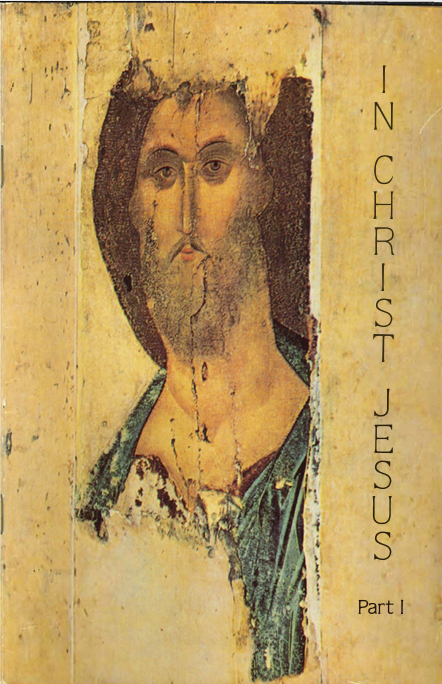
FRONT COVER
The Savior
Early 15th Century
Andrei Rublev
Tretyakov State Gallery Moscow